

Corporate Conference Management Guide 2026
Introduction
Planning a corporate conference while managing your regular workload is genuinely difficult. 70% of planners expect live meeting volume to increase by up to 20% in 2026, and the U.S. corporate event services market is projected to reach $57.86 billion by 2035.
Key takeaways
- Define clear objectives before booking anything — vague goals lead to unfocused agendas and wasted spend.
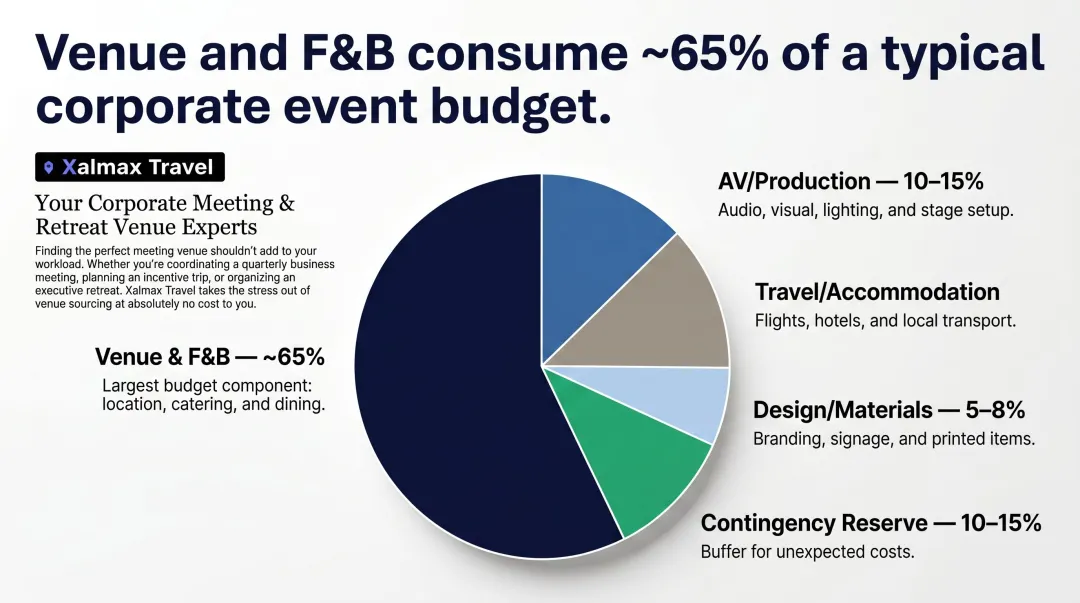
- Venue and F&B typically consume 65% of your budget; set your venue budget first, then build in a 10–15% contingency.
- Venue selection shapes every other variable — evaluate infrastructure and contracts, not just aesthetics.
- Post-event follow-up within 48 hours increases attendee purchase intent by 45%.
What is corporate conference management?
It's the full process of planning, coordinating, and executing a business gathering, from initial goal-setting through post-event analysis. Common formats include annual all-hands meetings, leadership summits, sales kickoffs, training workshops, product launches, and hybrid or virtual conferences.
Outsourcing models
| Model | Best for |
|---|---|
| Fully in-house | Small events, tight budget, experienced team |
| Hybrid | Mid-size events with specific technical needs |
| Full outsourcing | Large or complex programs, limited internal capacity |
The 5 C's of corporate conference management
- Concept — define purpose, format, audience, and outcomes.
- Coordination — assemble suppliers, confirm vendors, build timelines.
- Control — monitor execution and track budget in real time.
- Culmination — the event itself.
- Closeout — post-event surveys, financial reconciliation, lessons learned.
The conference planning process, step by step
1. Define objectives and success metrics
Set a well-defined objective before opening a venue search — it determines everything downstream, from format to budget allocation.
2. Assemble your planning team and timeline
- Under 250 attendees: begin planning 6 months out.
- 250+ attendees or multi-day programs: 9–12 months out.
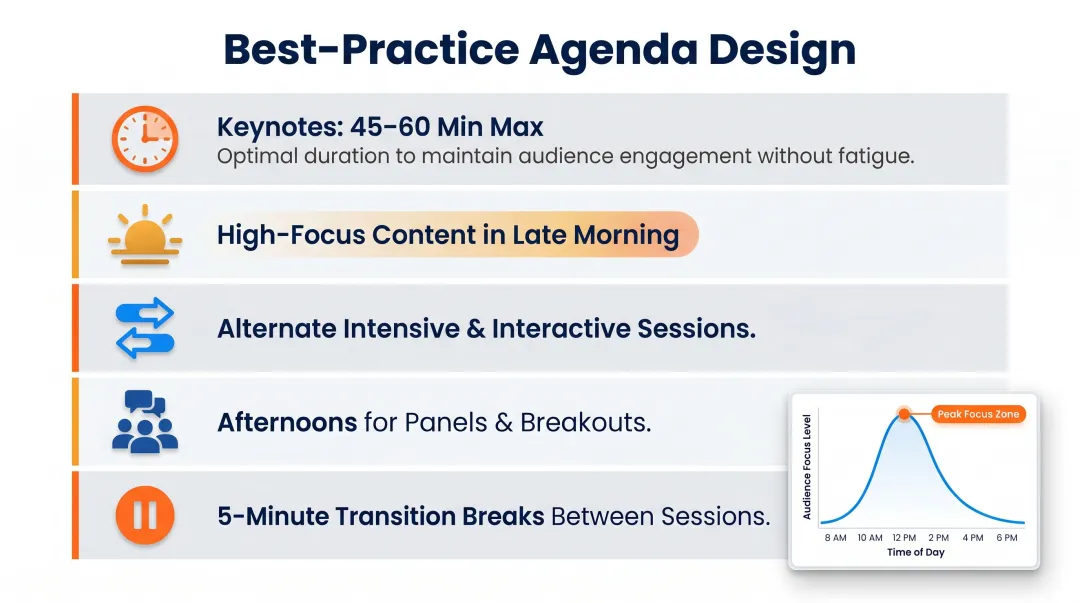
3. Design the agenda
4. Lock down pre-event logistics
AV dry-run, dietary and accessibility confirmations, attendee communications, and contingency plans.
5. Post-event follow-through
Follow-up within 48 hours increases purchase intent by 45%. Send surveys that measure results against the objectives you set in step one.
Budget allocation framework
| Category | Approximate share |
|---|---|
| Venue + F&B | ~65% |
| AV / production | 10–15% |
| Travel / accommodation | Varies |
| Design / materials | 5–8% |
| Contingency | 10–15% |
Hidden costs to watch: service charges of 22–25% on F&B, exclusive vendor mandates, attrition fees, Wi-Fi upgrades, and overtime.
Venue selection
Evaluate infrastructure, not just aesthetics: Wi-Fi bandwidth, breakout room count, AV quality, and kitchen capability.
| Setup | Sq ft per person |
|---|---|
| Theater | 9 sq ft |
| Classroom | 15 sq ft |
| Banquet | 13 sq ft |
| Boardroom | 40–50 sq ft |
Contract terms worth negotiating: attrition (aim for a 20% cushion), cancellation fees, exclusive vendor rights, and how service charges get distributed.
How Xalmax Travel simplifies venue selection
Submit your budget, attendee count, preferred city, and requirements. Xalmax delivers a tailored shortlist with detailed proposals, competitive rates, and confirmed availability, then handles negotiations, contracts, and logistics, including the clauses most companies miss. The service costs nothing to clients; hotels and venues pay the commission.
Read next: see how our conference planning service puts this framework to work on your next event.
More planning guides
From the same team that sources your venues, at no cost to your business.