

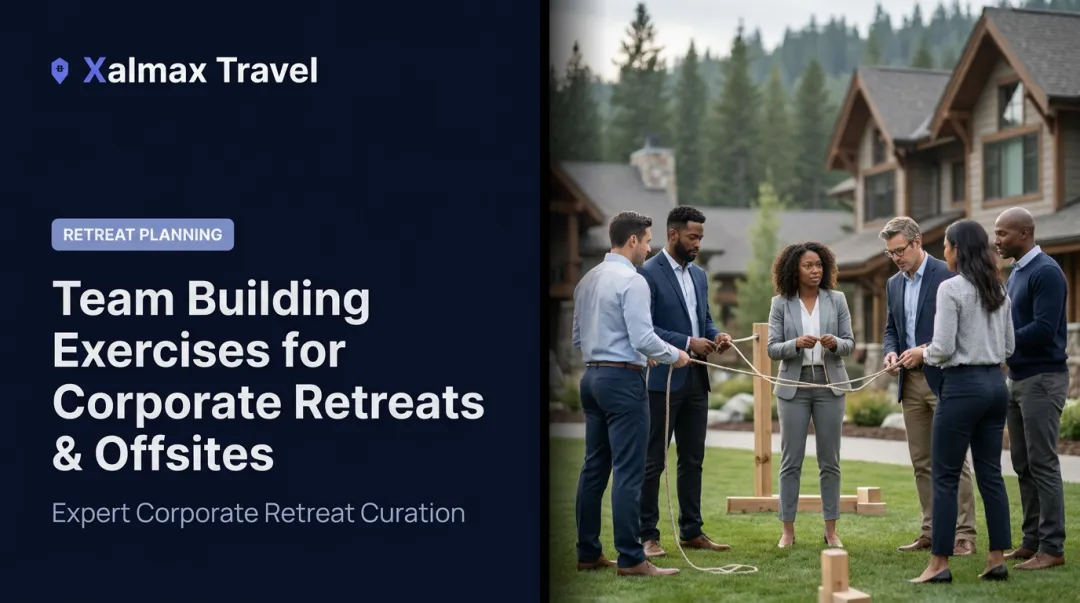
56 Fun Corporate Team Outing Ideas for 2026
Introduction
Disengaged employees aren't just unhappy, they're expensive. According to Gallup's 2026 State of the Global Workplace report, global employee engagement fell to just 20% in 2025, costing the world economy an estimated $10 trillion, roughly 9% of global GDP.
A well-planned outing outside the office is one of the most underused tools for rebuilding connection, but only when the activity is matched to a clear purpose. Below is a curated selection across four categories: indoor, outdoor, creative & cultural, and virtual/hybrid, plus a planning framework to match the right activity to your team's actual goals.
Indoor team outing ideas
Indoor outings offer year-round flexibility for groups of nearly any size.
- Escape rooms — peer-reviewed research identifies communication, delegation, and lateral thinking as core skills the format builds.
- Murder mystery dinners — a fictional whodunit layered over a shared meal, rewarding observation and collaboration.
- Trivia night — levels the playing field across seniority; works for groups of 10 to 100+.
- Cooking classes — a chef-led session creates natural delegation, time pressure, and a shared reward.
- Improv comedy workshops — research on similar formats found 91–93% of participants reported a positive impact on teamwork.
- Laser tag, bowling, and indoor rock climbing — low-barrier, cross-department formats for mixed fitness levels.
Outdoor & adventure ideas
A 2024 case study in the Journal of Outdoor Recreation and Tourism found 8 of 9 employees at a global cybersecurity firm increased their workplace psychological capital following a five-day outdoor adventure program — outdoor settings genuinely accelerate trust-building.
- Guided hikes — strip away office hierarchy; choose accessible trails when fitness levels vary.
- Kayaking or canoeing — makes collaboration physically literal, with immediate feedback.
- Axe throwing & go-kart racing — social, scalable to 10–50 participants, and generates conversation for weeks.
- Ropes course or high ropes challenge — professionally-led programs build leadership and trust with a facilitated debrief.
- Field day with relay races — nostalgia-driven, democratic, and requires no skill or fitness to enjoy.
- Camping or glamping trip — multi-day formats build the kind of connection a single afternoon can't replicate.
Creative & cultural ideas
Especially effective for teams that need mental decompression, cross-functional bonding, or a change of perspective.
- Pottery, glassblowing, or group mural painting — no one arrives an expert, which equalizes status between executives and new hires.
- Museum or gallery tour — sparks discussion about interpretation and perspective.
- Cultural food tour or wine tasting — relaxed, conversation-rich, effective for client appreciation events.
- Volunteering or a day of service — creates shared purpose competition-based activities rarely match, with employer-branding value too.
Virtual & hybrid ideas for remote teams
Gallup reports 51% of remote-capable US employees worked hybrid in 2025, averaging 2.3 on-site days per week. Distributed teams need intentional connection-building too:
- Virtual trivia or online escape rooms — breakout rooms and a shared scoreboard keep competitive energy high.
- Virtual cooking or paint-and-sip classes — supply kits shipped in advance eliminate setup friction.
- Virtual happy hours with structured icebreakers — prevents the format from becoming a passive hang.
Hybrid outings need deliberate design: simultaneous virtual and physical tracks, a dedicated hybrid facilitator, and shared digital artifacts both groups contribute to.
How to plan an outing your team will love
Start with a goal, not an activity
| Goal | Best format |
|---|---|
| Onboarding / new hire cohort | Rapport-building: cooking class, bowling, scavenger hunt |
| Cross-functional alignment | Collaborative challenges: escape rooms, ropes course, field day |
| Morale recovery after a hard sprint | Decompression: paint and sip, food tour, cookout |
| Milestone celebration | High-energy or elevated: axe throwing, go-karts, wine tasting |
| Leadership development | Reflective and facilitated: ropes course, outdoor adventure, improv |
SHRM's research on team-building is direct: efforts fail when they lack clear goals, skip employee input, and treat the outing as a standalone event with no follow-up.
Pre-event checklist
- Confirm the date and venue at least 4–6 weeks out (longer for large groups or peak seasons).
- Communicate logistics clearly: dress code, location, timeline, what to bring.
- Keep structured activity windows to 60–90 minutes; energy drops sharply after that.
- Plan transportation, especially if alcohol is part of the event.
- Send a brief follow-up survey within 48 hours to capture what worked.
For larger off-site outings, retreats, or multi-day events, our team retreat sourcing service handles venue research, negotiated rates, and contracts, at no cost to your business.
Frequently asked questions
How long should a corporate team outing be?
Most single-activity outings run 2–4 hours effectively. Overnight and multi-day retreats are best reserved for leadership teams or major onboarding cohorts.
What works best for large groups?
Formats that scale to 30–100+ people: scavenger hunts, field day competitions, cooking competitions, bowling leagues, and trivia tournaments — anything with a parallel-track structure.
How often should companies do team outings?
Three to four intentional outings a year, tied to meaningful moments like quarter closes or project completions, consistently outperforms arbitrary monthly events.
More planning guides
From the same team that sources your venues, at no cost to your business.